
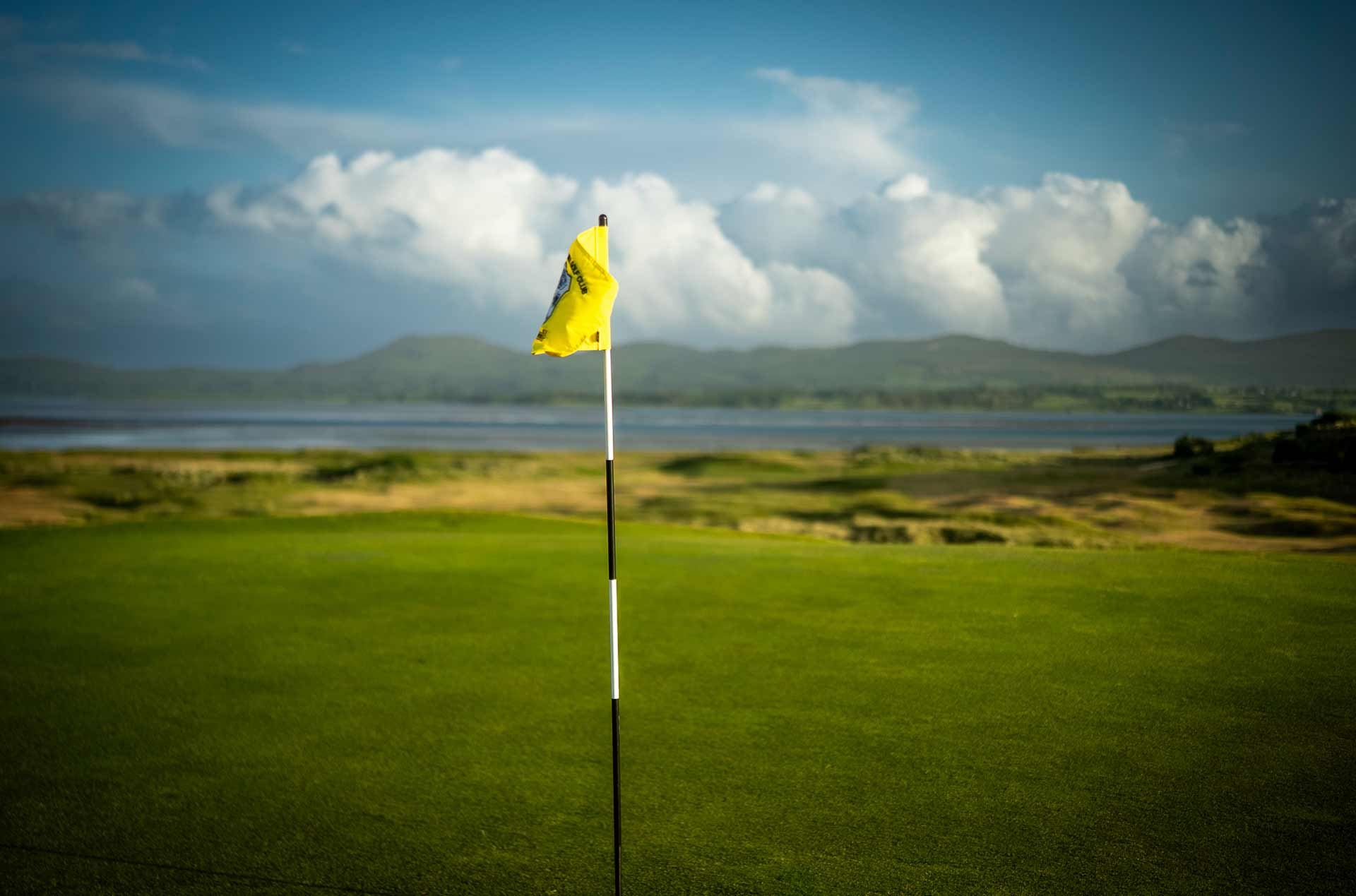
There is a moment, somewhere on the first tee of an Irish links course, when a golfer used to manicured inland fairways realises this is going to be a different kind of day. The fairways are firm. The wind is doing something to the flag that does not look friendly. There is not a tree in sight, and the green in the distance seems to be guarded by nothing more than a few innocent-looking humps and hollows. Links golf can be humbling, but it is also the purest and most rewarding form of the game, and Ireland is one of the finest places in the world to play it.
If you have never played a links course before, this guide will walk you through what makes them different, how to adjust your game, and how to prepare so that your first round feels like an adventure rather than an ordeal.
What Is Links Golf?
Links golf is the oldest form of the game, played on the sandy, coastal land that “links” the sea to the more fertile farmland inland. This linksland is shaped by nature rather than design: rolling dunes, firm turf, and deep natural hollows formed by centuries of wind and grazing. Because the soil is sandy and drains quickly, links courses stay firm and fast underfoot, which is the single biggest reason they play so differently from the lush parkland courses many golfers learn on.
Ireland’s position on the edge of the Atlantic has given it an extraordinary concentration of natural linksland, and with it a golfing heritage that draws players from all over the world. If you would like a deeper look at what gives these courses their character, our companion piece on what makes links golf in Ireland so special is a good place to start.
How Links Golf Differs from Inland Courses
The differences become obvious within a hole or two. On a parkland course, the ball tends to land and stop. On a links, it lands and runs, sometimes a very long way. Trees, which frame and protect inland holes, are almost entirely absent, leaving you exposed to the wind and forcing you to think about shot shape and trajectory rather than simply aiming between the timber.
The greens are often open at the front, inviting the ball to be run on rather than flown in and stopped. The terrain undulates constantly, so a flat lie is a luxury rather than a given. And the rough, particularly the wispy marram grass on the dunes, can be punishing in a way that a gentle inland cut never is. None of this is designed to be unfair. It is simply golf played across the land as it was found, and learning to work with it is where the enjoyment lies.
Learning to Play the Ground
The most important adjustment for a first-timer is learning to use the ground rather than fight it. Inland golf rewards the high, soft approach that drops and stops. Links golf rewards the low, running shot that uses the firm turf to its advantage.
The classic links shot is the bump-and-run: a low, controlled approach played with a less-lofted club that lands short of the green and releases towards the hole. Many experienced links players will happily putt from several metres off the green rather than risk a chip that the wind or a firm bounce could ruin. It feels unfamiliar at first, but once you trust it, the ground game becomes one of the great pleasures of links golf. The simplest advice for a first round is this: keep the ball low, let it run, and resist the urge to fly everything to the pin.
Respecting the Wind
Wind is not an occasional inconvenience on an Irish links. It is a permanent member of the four-ball. On a calm day a links course can be there for the taking. When the Atlantic breeze gets up, the same course becomes an exercise in patience and control.
The key is to keep your ball flight down, where the wind has less to work with. Swing smoothly rather than harder, because a hard swing adds spin and sends the ball climbing into the gusts. Take more club than the yardage suggests when playing into the wind, and be prepared to aim well outside the flag when the wind is across you. Above all, accept that par into a strong wind is an excellent score, and that fighting the conditions is the fastest way to ruin a card.
Reading the Land: Bunkers, Dunes and Blind Shots
Links bunkers are not the shallow, friendly hazards of inland golf. The traditional pot bunker is small, deep and steep-faced, and often the only sensible play is to wedge out sideways and accept the loss. Treat them with respect and aim to avoid them entirely rather than challenging carries you are not certain you can make.
You will also meet undulations that throw up uneven lies, greens that run away in directions the eye does not expect, and the occasional blind shot where the target is hidden behind a dune. This is where local knowledge is worth more than any yardage book. Aiming markers, a quick word with the professional in the clubhouse, or simply a caddy on the bag can transform a confusing first visit into a thoroughly enjoyable one.
Preparing for Your First Links Round
A little preparation goes a long way. The Irish weather can offer all four seasons in a single round, so dress in layers and bring proper waterproofs and a warm top even on a bright morning. Soft spikes and a good pair of golf shoes will help on firm, sometimes slippery turf, and a hat that stays on in the wind is more useful than you might think.
In your bag, a couple of lower-lofted clubs you are comfortable running the ball with, a hybrid or a long iron, will serve you better than relying on high, spinning approaches. Most of all, bring the right mindset. Links golf rewards creativity, patience and a sense of humour. Plan to walk the course, take in the coastal scenery, and treat the bounces, good and bad, as part of the experience. Many Irish clubs are happy to arrange a caddy or offer local guidance, and on a first visit that advice is well worth taking.
Where to Experience Links Golf in Ireland
Ireland’s links courses are scattered along its coastline, and each region has its own character. The south-west is home to some of the most famous names in the game, while the north coast offers dramatic championship venues. For many visitors, though, it is the west coast and the Wild Atlantic Way that capture the spirit of Irish links golf most completely: natural, unspoilt courses set against the ocean, often with far fewer crowds than the headline venues.
Strandhill Golf Club, on the coast in County Sligo, is a fine example of this kind of authentic links experience. An 18-hole par 70 laid out among the dunes beneath Knocknarea mountain, it offers everything a first-timer could want from a links course: firm coastal turf, genuine Atlantic wind, memorable scenery and a warm welcome, all without the pressure or the price tag of the better-known championship links. It is the sort of place where you can learn what links golf is really about and enjoy yourself while doing it.
Frequently Asked Questions
Is links golf harder than parkland golf? It is different rather than simply harder. The firm ground and wind demand more creativity and control, but they also offer more options. Once you adapt to running the ball and managing the conditions, many golfers find links golf the more rewarding and enjoyable of the two.
What clubs are most useful for links golf? Clubs you can hit low and control are invaluable, so a hybrid or long iron for running approaches and a reliable wedge for the deep bunkers will earn their place. The ability to play a low, punchy shot matters more than carrying every club in the bag.
Do I need a caddy for my first links round? You do not need one, but on an unfamiliar course with blind shots and subtle greens, a caddy or some local guidance can make a real difference. At the very least, ask in the clubhouse for advice on the trickier holes before you head out.
When is the best time of year to play links golf in Ireland? Links courses are playable all year thanks to their free-draining sandy soil, but late spring through early autumn generally offers the most settled weather and the longest days. That said, a crisp, calm winter morning on the coast has a charm all of its own.
Ready to Play Your First Links Round?
There is no substitute for experiencing links golf for yourself. If you would like to test everything in this guide on a true Atlantic links, Strandhill Golf Club welcomes visitors throughout the year. Book a tee time and discover why links golf in Ireland keeps players coming back.



 Splash